

Quick Answers






How do you machine a D-shaped hole accurately?
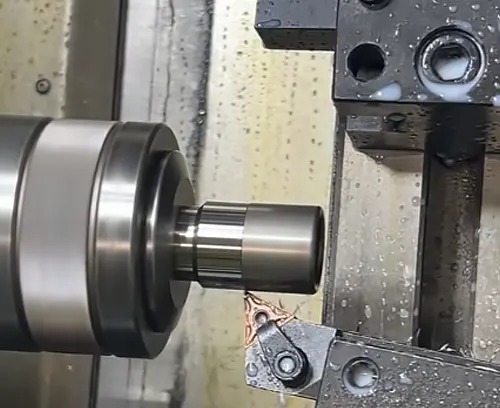
When it comes to machining precision parts, accuracy is key. One common challenge that engineers face is how to accurately machine a D-shaped hole.
Whether you are working with metal, plastic, or any other material, achieving precise dimensions and smooth finishes on D-shaped holes requires specialized techniques and tools.
Understanding D-Shaped Holes
Before diving into the machining process, it is essential to have a clear understanding of what precisely a D-shaped hole is A D-shaped hole is a hole with a flat or curved surface on one side, resembling the shape of the letter “D”.
These types of holes are commonly used in various applications, including mechanical components, electronic enclosures, and automotive parts.
Choosing the Right Tooling
One of the first steps in machining a D-shaped hole accurately is selecting the right tools for the job.
When it comes to cutting internal shapes, such as D-shaped holes, end mills and drills are commonly used.
For precision and accuracy, consider using carbide or high-speed steel (HSS) tools that can withstand high cutting speeds and provide excellent surface finishes.
In addition to the type of tooling, the size and geometry of the tool are also important factors to consider.
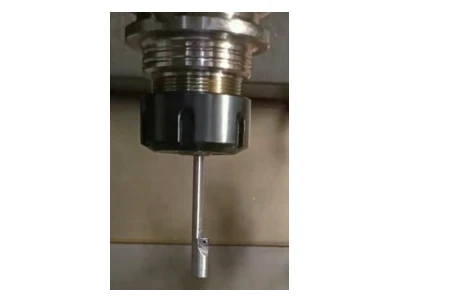
For D-shaped holes, consider using a ball end mill or a special D-shaped end mill that is specifically designed for this purpose.
These tools feature a rounded profile that enables effective machining of the curved portion of the D-shaped hole, ensuring smooth and accurate results.
Programming and Toolpath Design
Once you have chosen the right tools, the next step is to create a machining program and toolpath that accurately defines the shape of the D-shaped hole.
This involves setting the correct cutting parameters, such as spindle speed, feed rate, and depth of cut, to achieve the desired dimensions and surface finish.
When programming the toolpath for a D-shaped hole, consider using 2D or 3D CAD/CAM software to generate the necessary toolpath.
Ensure that you accurately define the shape and dimensions of the D-shaped hole in the software, taking into account any radius or fillet corners that may be present.
This will ensure that the tool follows the correct path and produces a precise D-shaped hole.
Fixturing and Workholding
To machine a D-shaped hole accurately, proper fixturing and workholding are crucial.
The workpiece must be securely held in place to prevent movement or vibration during the machining process, which can lead to inaccuracies and poor surface finishes.
Consider using a custom fixture or vise that is specifically designed to hold the workpiece in position while machining the D-shaped hole.
Ensure the workpiece is correctly aligned with the cutting tool to ensure the hole is machined at the correct location and orientation.
Machining Techniques
When machining a D-shaped hole, it is crucial to employ the correct techniques to achieve accurate and precise results.
Start by roughing out the shape of the hole using an end mill or drill, then gradually increase the depth of cut to achieve the final dimensions.
For the curved portion of the D-shaped hole, use a ball end mill or a D-shaped end mill to contour the shape smoothly.
This will help eliminate any sharp corners or rough edges, resulting in a clean and accurate finish. Be sure to use coolant or lubricant to reduce heat buildup and prolong the life of the cutting tool.
Measuring and Inspection
After machining the D-shaped hole, it is essential to measure and inspect the final result to ensure that it meets the required specifications.
Use precision measuring tools, such as calipers or micrometers, to verify the dimensions and geometry of the hole. Conduct a visual inspection to identify any surface defects or irregularities.
If necessary, conduct a CMM (Coordinate Measuring Machine) inspection to verify the accuracy of the D-shaped hole and compare it against the CAD model.
This will help identify any deviations and ensure that the part meets the desired quality standards.
Conclusion
Machining a D-shaped hole accurately requires attention to detail, precision, and the use of the right tools and techniques.
By following proper procedures and considerations, engineers can ensure high-quality and reliable results in their manufacturing processes.
From choosing the proper tooling to programming the toolpath and inspecting the final part, each step plays a crucial role in achieving accurate and precise D-shaped holes.
By mastering these techniques, engineers can confidently tackle the challenge of machining D-shaped holes with confidence and success.